

The Other Parties tab is used to enter all remaining interested parties in the probate matter other than the decedent’s surviving spouse, children, and grandchildren.
Spouse and descendants should already be entered in their respective tabs. This tab captures additional beneficiaries, heirs not previously entered, trusts, entities, and other interested persons or structures that must be reflected in the probate proceeding.
Why This Tab Matters
Every interested person or entity must be entered before roles are assigned and documents are generated.
Incomplete party entry can result in:
Missing statutory notice recipients
Omitted beneficiaries
Incorrect pleadings
Deficiencies in waivers or consents
Accurate party entry ensures proper notice, correct drafting, and compliance with Washington probate law.
Who Should Be Entered on This Tab
Use this tab to enter:
Beneficiaries under the Will not previously entered
Heirs not captured in prior tabs
Trusts referenced in the Will
Charitable organizations
UTMA custodial arrangements
Nonprobate beneficiaries (when notice is required)
Other interested entities
Do not re-enter the surviving spouse, children, or grandchildren simply because they are beneficiaries. They already exist in the system.
Understanding the Three Layers for Probate Parties
This tab requires you to think in terms of three distinct layers. These layers must be kept separate.
Layer 1 - The Party Holding the Legal Interest
This is the person or entity that actually holds the inheritance interest and is the "party" to the matter.
Examples:
An individual beneficiary
A trust that is named as a beneficiary
A charitable organization
A minor beneficiary
A nonprobate beneficiary
This is the party you are adding.
Layer 2- The Fiduciary for That Party
Some parties cannot act on their own behalf and require a fiduciary.
Examples:
Trustee of a trust
UTMA Custodian for a minor
Court-appointed Guardian
The fiduciary manages or acts on behalf of the legal interest holder. The fiduciary is not the interest holder — the trust or minor is.
Layer 3 - The Legal Representative for Notice
Separate from fiduciary capacity, a party may also be represented for purposes of receiving notice. This is the “Party Representatve” section of the tab.
Representation for notice may include:
An attorney or law firm
A parent (for a minor)
A guardian
An agent under power of attorney
This layer determines who receives statutory notice, not who holds the interest or who acts as fiduciary. These three layers must not be merged.
Types of Probate Parties
Each party to the probate matter has a series of attirbutes that you want to capture on this tab so that your data relative to that party is constent throughout the probate drafting. It's critical to make sure that you've considered all possible parties.
Heirs vs. Beneficiaries
When adding individuals to this tab, keep in mind that beneficiaries named in the Will are not necessarily heirs under Washington law, and heirs are not necessarily beneficiaries.
Both categories may require entry.
For example:
A charity may be a beneficiary but not an heir.
A person not be named in the Will may be a remote heir who is required to get notice.
Need Help Determining the Decedent’s Heirs?

If you are unsure whether all heirs have been identified and entered, click Review the Decedent’s Heirs. The system analyzes previously entered information (marital status, spouse, children, and descendants) and identifies who qualifies as heirs under Washington intestacy law.

If the results appear incomplete or incorrect, review and update the earlier tabs before proceeding.
Trusts, Charities, and Custodial Arrangements
When adding a trust, entity, or custodial structure:
Add the trust, entity, or minor as the party holding the interest.
Identify the fiduciary associated with that party.
The fiduciary may:
Already exist in the system (e.g., surviving spouse), in which case select from existing parties; or
Be a new individual who must be added.
Do not duplicate individuals already entered.
Nonprobate Beneficiaries
If nonprobate beneficiaries differ from heirs or Will beneficiaries, they should be entered here. Under RCW 11.28.237, certain nonprobate beneficiaries must receive notice of the pendency of probate after appointment. Entering them ensures proper role assignment and notice.
Adding Fiduciaries that Represent Parties
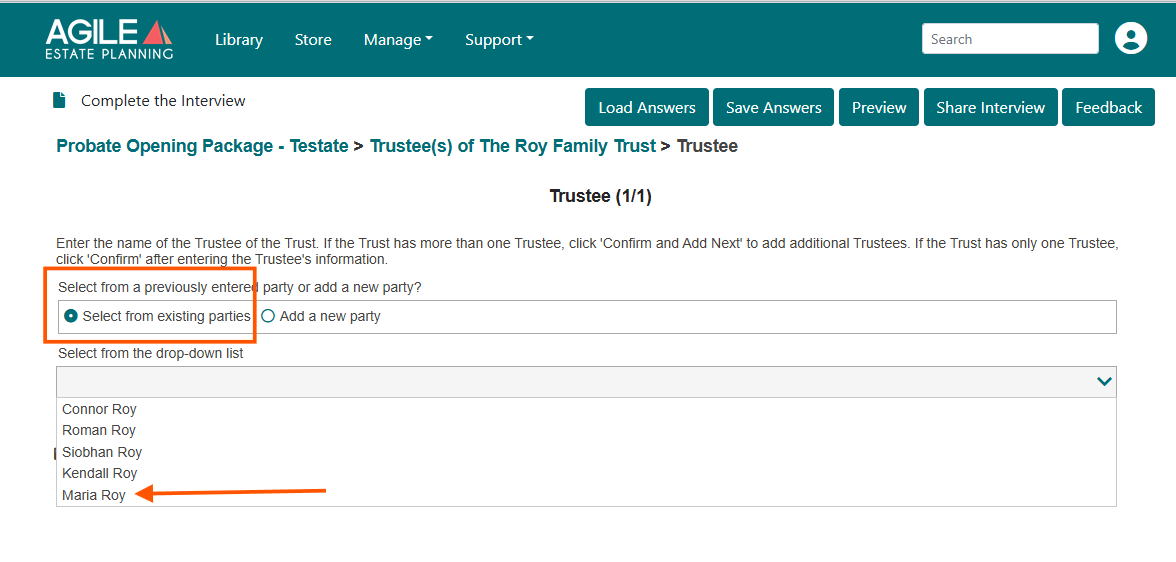
If the fiduciary (Trustee, Custodian, Guardian) was previously entered elsewhere:
Select “Select from existing parties.”
Choose the individual from the list.
Only use “Add a new party” if the fiduciary for your probate party has not yet been entered anywhere in the interview.
For example: you want to add a Marital Trust as a beneficiary and the surviving spouse is Trustee
Add the Trust as a party:
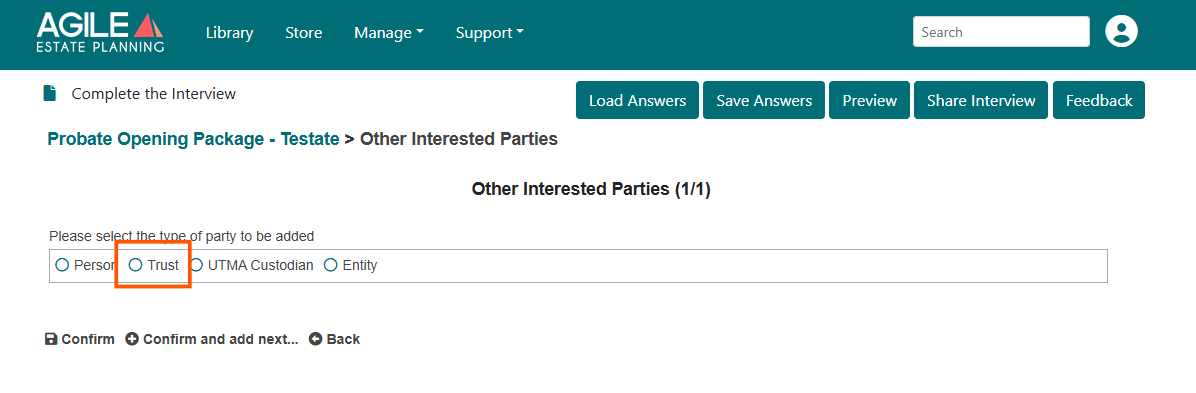
Add the Trustee of the Trust:
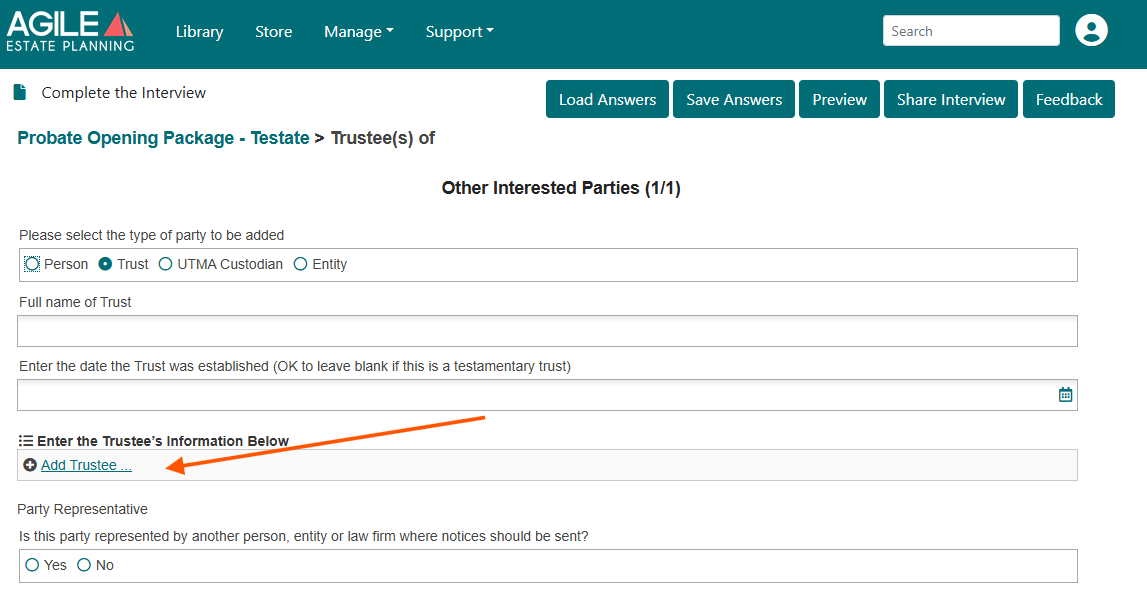
Select the spouse as Trustee from the "existing parties":
Legal Representative of Parties
The “Party Representative” section refers to legal representation of each party for notice purposes only.
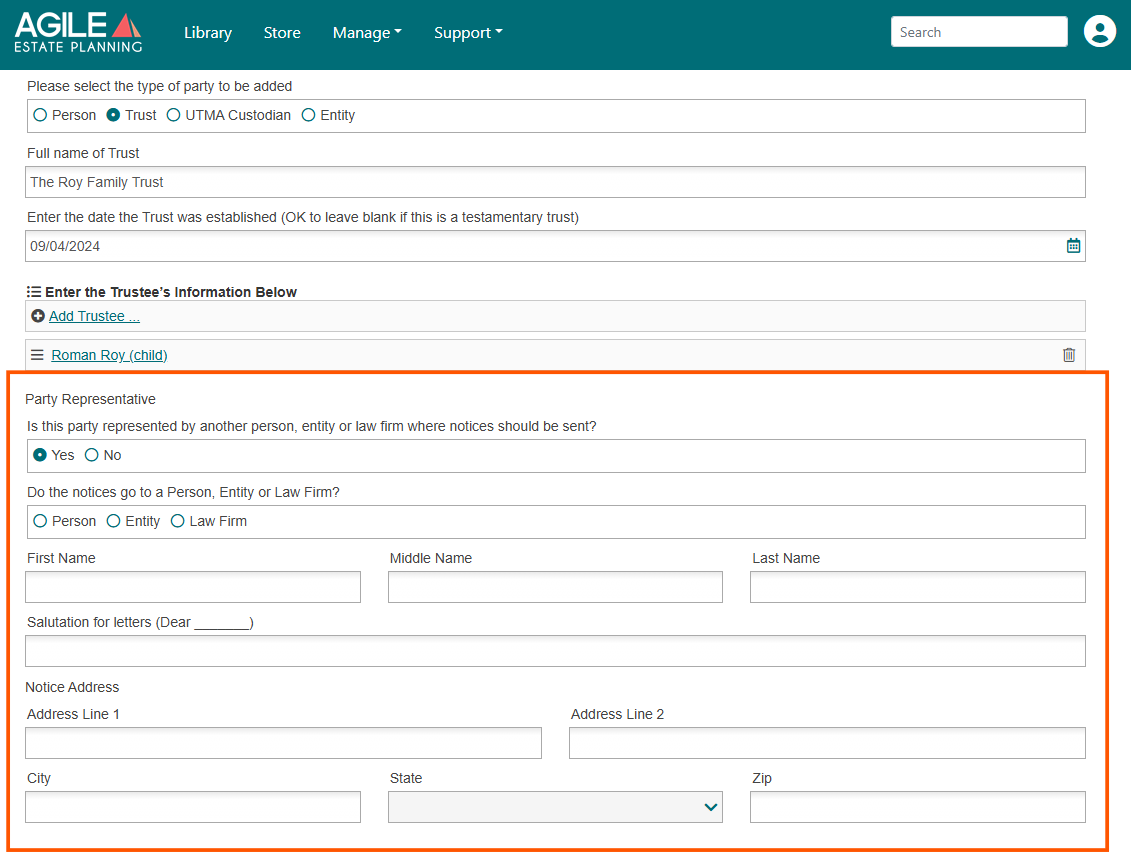
When a representative is entered:
Statutory notices will be directed to the representative instead of the underlying party.
The pleadings will reflect that the party is represented, but will still indicate that the party is the party in interest.
Notice tracking will follow the representative’s contact information.
Again, the underlying party remains the legal interest holder. The representative is designated solely for notice purposes.