

The Petitioner Information tab collects information about the individual or entity seeking appointment as Personal Representative.
Your responses on this tab determine:
How the Petition describes the Petitioner’s authority
Whether the Petitioner has priority under the Will
Whether additional information about higher-priority nominees must be included
Whether waivers or additional allegations are required
This tab directly affects the legal sufficiency of the Petition for Probate.
Why This Tab Matters
To have a Personal Representative appointed, the court must understand:
Why this Petitioner has authority to serve; and
Whether anyone else has higher priority to serve.
If the Petitioner is not the highest-priority nominee under the Will (or Codicil), the Petition must identify those with superior priority and explain why they are not serving.
When Petitioner Is Named in the Will (or Codicil)
If the Petitioner was nominated in the Will, appointment is based on testamentary nomination.
Therefore, when you select Yes:
The Petition will allege nomination by the Decedent's Will or Codicil
You must identify the Petitioner’s level of priority.
You must disclose any higher-priority nominees who are not serving.
Identify the Petitioner’s Level of Priority
You must select whether the Petitioner is:
Initial (primary nominee)
First successor
Second successor
Third successor
If the Petitioner is not the primary nominee, the Petition must list all higher-priority Personal Representatives named in the Will (or Codicil) and explain why each is not serving.
If the Petitioner Is the Highest-Priority Nominee
If the Petitioner is the highest priority nominee in the Will, you must then confirm that there was not another party named to serve as a Co-Personal Representative with them. If there was, then you must enter that nominee's name and explain why they are not serving, either because they are deceased, declined, or disqualified.
If the Petitioner Is Not the Highest-Priority Nominee
If the Petitioner is a successor nominee rather than the primary nominee, you must list all higher-priority Personal Representatives named in the Will (or Codicil) who are not serving. The court must be able to determine from the Petition that the Petitioner is properly next in priority.
The petition must affirmatively address all individuals nominated to serve and why they are not petitioning (e.g., deceased, declined to serve, or disqualified).
- Use the Add Personal Representative button to enter each named PR who is not serving.
- Select the reason for such person not serving, either because they are deceased, declined, or disqualified.
For persons that have declined to serve, a Declination to Serve document will be created for them to sign (or recommended on the Document Selection Tab. The other explanations will simply be mentioned in the Petition.
When the Petitioner Is Not Named in the Will
If the Petitioner was not nominated in the Will (or Codicil), the Petition must establish authority through another valid mechanism. When you select No, the system will prompt you to identify how the Petitioner is being designated.
You must select one of the following options:
- The Will Allows the Surviving Spouse to Name a PR
The Will may grant the surviving spouse authority to designate the Personal Representative. In this case, the system will draft a "Designation of Personal Representative" for the spouse to sign and for filing with the court. - The Will Allows a Non-Spousal Party to Name a PR
Some Wills authorize a named individual (other than the spouse) to appoint a Personal Representative. In this case, the system will draft a "Designation of Personal Representative" for the person to sign and for filing with the court. - The Petitioner Has Statutory Priority of Appointment
If the Will does not nominate or authorize appointment, the Petitioner may qualify under Washington statutory priority rules in RCW 11.28.120. - The Surviving Spouse Is Appointing Under Statutory Authority
In some cases, the surviving spouse may have authority under RCW 11.28.120 to designate or serve. In this case, the system will draft a "Designation of Personal Representative" for the spouse to sign and for filing with the court.
If the Petitioner's authority is derived from stautory property and not a designation by another party, then you must determine whether there are any other persons with statutory authority?
- If No, the Petition will allege that the Petitioner has superior statutory authority.
- If Yes, the Petition must identify those individuals and explain why they are not serving.
Decedent’s Next of Kin with Statutory Priority
When statutory priority is involved, the Petition must disclose others who may share or exceed the Petitioner’s priority level under RCW 11.28.120. Use Add Next of Kin to enter these individuals in the table, which you must determine from review of the statute and the parties.
For example:
If the Petitioner is a child of the Decedent, all other children must be listed, along with the reason each other child is not serving.
If the Petitioner is the Decedent's sibling, then those with higher priority, like the spouse and any children, must be listed, along with the reason that they are not serving.
Use Add Next of Kin to enter these individuals in the table. If a next of kin is not an existing party, you may enter them on this tab.
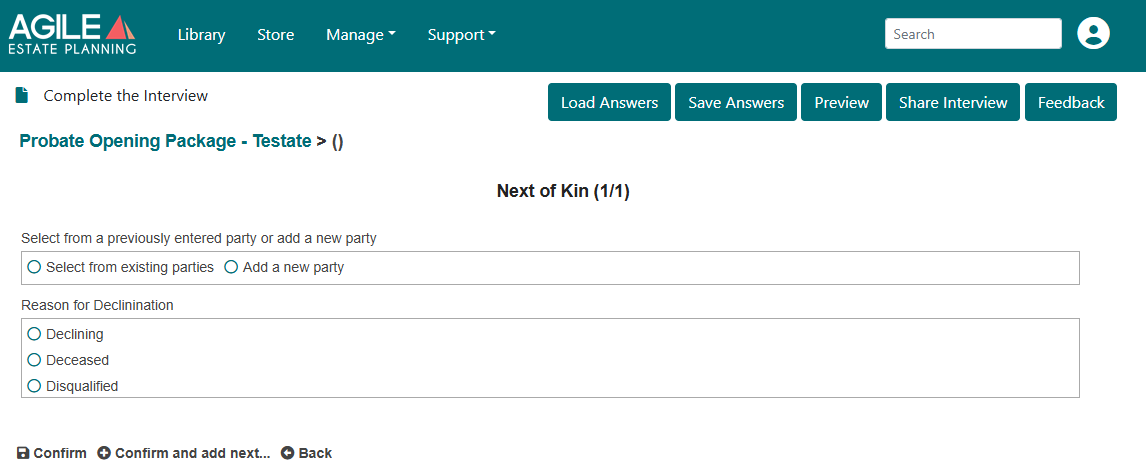
For any next of kin who have higher priority but who will not be serving, a Declination to Serve will be drafted by the system or their death or disqualification entered into the Petition.
Petitioner Qualifications
This section gathers information related to statutory qualifications to serve (RCW 11.36.010), including:
Whether the Petitioner has ever been convicted of a felony.
Whether the Petitioner has ever been convicted of a crime involving moral turpitude (e.g., theft).
These questions support drafting the Petition and may impact the court’s evaluation of the Petitioner’s fitness to serve.
Provide accurate responses as these are factual representations to the court in the Petition.