Agile EP is designed to support both coordinated estate planning packages and structured probate drafting. While estate planning provides the clearest illustration of the system’s architecture, the same drafting principles apply across practice areas.
The platform is built on a consistent philosophy: legal documents should be structurally coordinated, data-driven, and adaptable to the scope of the engagement.
Whether drafting a comprehensive estate plan, a limited-scope instrument, or a probate filing, the system is designed to maintain internal consistency and reduce drafting friction.
Coordinated Drafting as the Default Model
In estate planning, an estate plan is not a single document. It is a coordinated set of instruments that work together to carry out a client’s intent.
- A will or trust governs asset disposition.
- Powers of attorney govern incapacity.
- Health care documents address medical decision-making.
- Fiduciary appointments must align across instruments.
- Distribution provisions must remain internally consistent.
Similarly, in probate, petitions, notices, declarations, and orders must align in language, factual recitations, and procedural posture.
For that reason, Agile EP organizes drafting around structured workflows rather than isolated forms. In estate planning, this takes the form of coordinated estate planning template packages. In probate, it takes the form of packages based upon structured filing sequences. In both contexts, the objective is consistency and controlled expansion.
Flexible Scope: Comprehensive or Focused Drafting
Although the system supports coordinated drafting, it is equally designed to accommodate focused, standalone engagements.
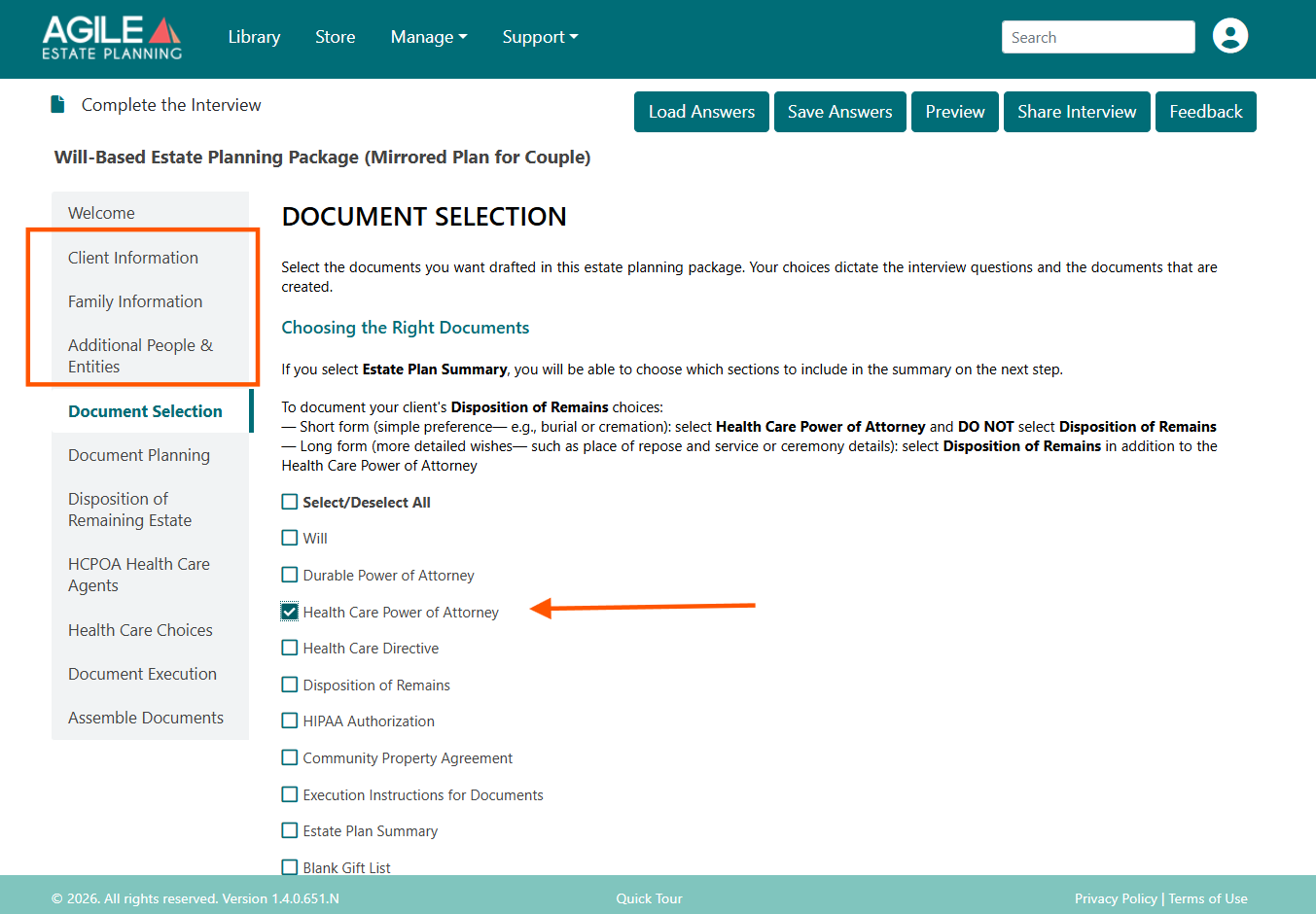
For example, in estate planning, individual documents within a package can be drafted independently. A client who needs only a Health Care Power of Attorney does not require a full Will or Trust package.
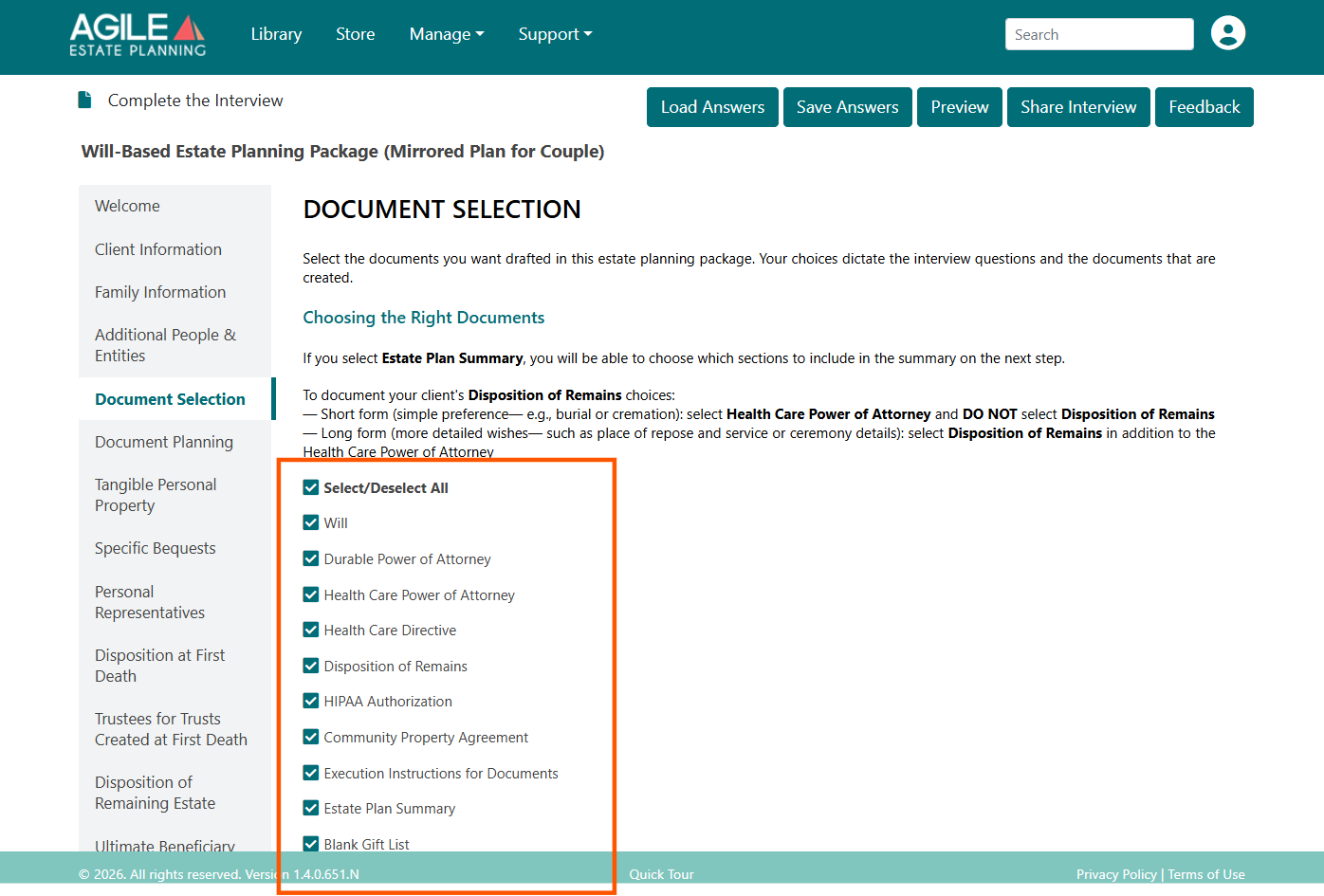
Drafting all documents in a package:
Drafting only one document in a package:
Standalone drafting:
- Uses the same structured People data
- Adapts interview questions to the selected document
- Allocates authority and preferences appropriately
This allows limited-scope drafting without abandoning structural consistency.
Narrative Summaries and Execution Guidance
In estate planning, the Estate Plan Summary and execution instructions are generated from structured drafting choices. Even when drafting a single document, the summary can be tailored to describe only the selected instrument.
This supports:
- Clear written explanation for clients
- Professional presentation in limited engagements
- Alignment between narrative description and document content
The same principle applies in probate and other workflows: structured data allows explanatory materials, checklists, and procedural guidance to remain aligned with the selections made during drafting.
Because summaries and execution instructions are generated from structured data, they remain consistent with the underlying documents.
Plain Language Drafting
Documents across the system are drafted in modern, readable language.
The system avoids:
- Archaic legalisms
- Redundant phrasing
- Unnecessary repetition
- Ceremonial constructions
Defined terms are used intentionally and consistently. Sentences are structured for clarity rather than tradition.
Plain language in this context is not simplification. It is disciplined drafting focused on precision, enforceability, and readability.
Use Declarations Instead of Affidavits
Under RCW 5.50, Washington law allows most affidavits to be replaced with unsworn declarations signed under penalty of perjury. Agile Estate Planning uses Declarations whenever possible, including for proof of mailing documents.
Structural Precision Instead of Boilerplate
Provisions appear because the client’s data requires them, not because they are traditionally included.
In estate planning:
- Guardianship provisions appear when minors exist
- Branch representation reflects actual descendant structure
- Stepchild definitions appear only when relevant
In probate:
- Procedural language reflects the selected filing pathway
- Notices and declarations align with entered case data
The Agile EP system avoids unnecessary boilerplate by tying document expansion to structured input. Documents expand where facts justify it and remain concise where they do not.
Personalization Through Structured Data
Personalization in Agile EP is structural rather than cosmetic. Interview data generates:
- Relational references such as “my sister” or “my brother-in-law”
- Accurate family recitations
- Proper defined-term application
- Context-aware contingent provisions
- Consistent case-specific language in probate filings
Because drafting decisions are captured as structured data, updates, amendments, restatements, and follow-up filings can be completed more efficiently. Client-facing summaries and procedural guidance remain aligned with the underlying documents.
This approach promotes consistency across documents, explanations, and future revisions.
A Maintainable Drafting Framework
The structured drafting model is designed not only for initial document generation, but for long-term maintainability.
Because decisions are captured as data:
- Amendments are easier to implement
- Plan summaries remain accurate
- Execution instructions reflect current selections
- Probate filings remain consistent with case data
- Client communication remains aligned with drafted content
The system is designed to support clarity, coordination, and maintainability over time, regardless of whether the engagement is estate planning or probate.