

The Tangible Personal Property tab controls how household goods, personal effects, and similar items are handled under the plan.
Tangible personal property may be distributed:
Through a separate Personal Property Memorandum (Gift List)
Through general distribution provisions within the Will or Trust
The options available depend on:
Whether a Gift List is selected on the Document Selection tab
Whether the plan is mirrored or non-mirrored
Whether the client is married or single
Whether the template permits itemized gifts
This tab reflects the structural framework selected earlier in the interview. It does not override it.
Personal Property Memorandum (Gift List)
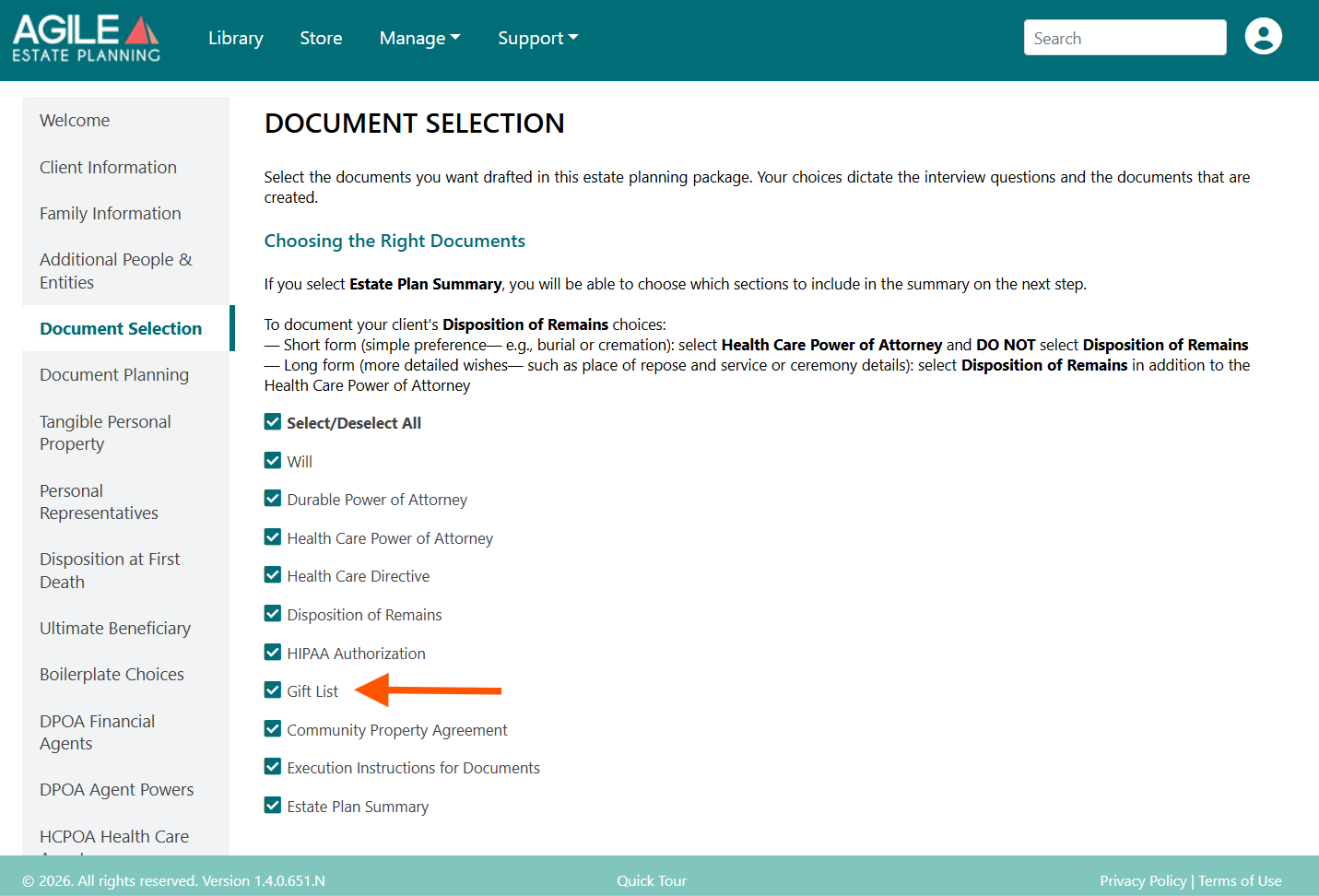
On the Document Selection tab, you may choose whether to include a Gift List in the package.
Selecting Gift List adds a Personal Property Memorandum to the plan. Deselecting Gift List means tangible personal property will be governed solely by dispositive provisions in the Will or Trust.
Mirrored Plans
In mirrored plan packages for couples:
A separate, blank Gift List is automatically created for each spouse or partner
No itemized tangible personal property gifts are entered during drafting
Each memorandum is intentionally left blank for completion outside the interview
In mirrored plans, tangible personal property is handled exclusively through these blank memoranda.
Non-Mirrored and Single-Person Plans
In non-mirrored plans, including single-person plans, additional flexibility is available. If you want to either use a blank memorandum or add itemized gifts to the memorandum, you should still select "Gift List" on the Doucument Selection tab. Itemization is then chosen on the Document Planning tab.
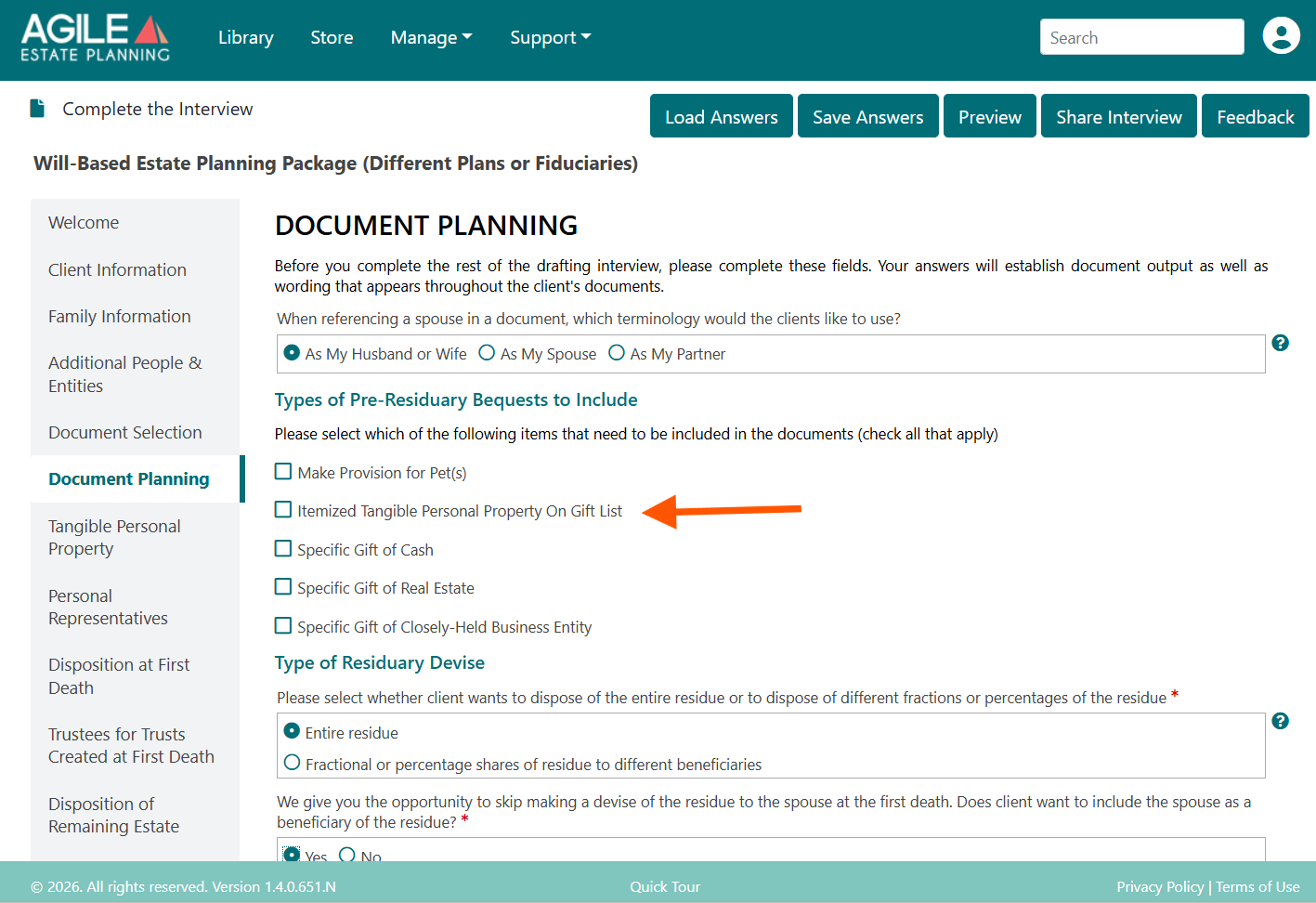
If itemization is selected:
Specific items of personal property may be listed
Beneficiaries are selected within the interview
The resulting personal property memoranda reflect those specific distributions
Tangible Personal Property for Married Clients
For married clients, tangible personal property is addressed in two stages: first death and second death.
Distribution at First Death
You are asked whether the surviving spouse should receive the deceased spouse’s tangible personal property.
- If Yes is selected, the property passes outright to the surviving spouse.
- If No is selected, tangible personal property is distributed under the remaining plan structure.
This governs how property is handled between the first and second deaths.
Distribution at Second Death
You then determine how tangible personal property is handled after both spouses have died. Options include:
One or more individuals
A class of people
Let the Personal Representative or Trustee distribute
These selections control the ultimate disposition of tangible personal property.
Tangible Personal Property for Single Clients
For single clients, there is no first-death or second-death distinction. You determine who receives tangible personal property at death. The same recipient options apply:
One or more individuals
A class of people
Let the Personal Representative or Trustee distribute
Possible Non-Spouse Recipients
There are three standard options for the beneficiaries of tangible personal property.
One or More Individuals
Selecting "one or more individuals" allows you to name specific people as recipients. You may select from previously entered individuals. If a person does not appear, you must go back to the Family or Additional People & Entities tab and add the person.
You will also determine how the property is divided:
Whatever shares they agree to, even if unequal
Approximately equal shares
An optional selection process may be included if beneficiaries cannot agree.
A Class of People
Selecting "a class of people" defines a group rather than naming individuals (for example, children or descendants). You determine:
Which class receives the property
How property is divided among class members
Division options mirror those available for named individuals. A selection process may also be added if agreement cannot be reached.
Let the Personal Representative or Trustee Distribute
Selecting fiduciary discretion delegates tangible personal property decisions to the acting fiduciary. Under this structure:
The fiduciary determines distribution, sale, donation, retention, or disposal
Unassigned property and sale proceeds pass to the residue
Decisions made in good faith are binding
This option provides administrative flexibility when specific recipients are not designated.
Coordination with Minor Children’s Trusts
When minor children receive benefits in trust, tangible personal property decisions may require additional coordination.
If tangible personal property passes to minor children who are trust beneficiaries, a follow-up option appears in the Terms for Trusts for Residuary Beneficiaries tab allowing you to specify whether:
Tangible personal property should transfer into the child’s trust
The trustee is authorized to manage or maintain that property
This setting aligns tangible personal property handling with overall trust administration.